Securing dependable HVAC Roseville service requires prompt triage when triple-digit summer heat or winter valley freezes stress your climate hardware. Technicians evaluate your system on-site with transparent diagnostic testing to isolate airflow restrictions, electrical failures, and refrigerant leaks.
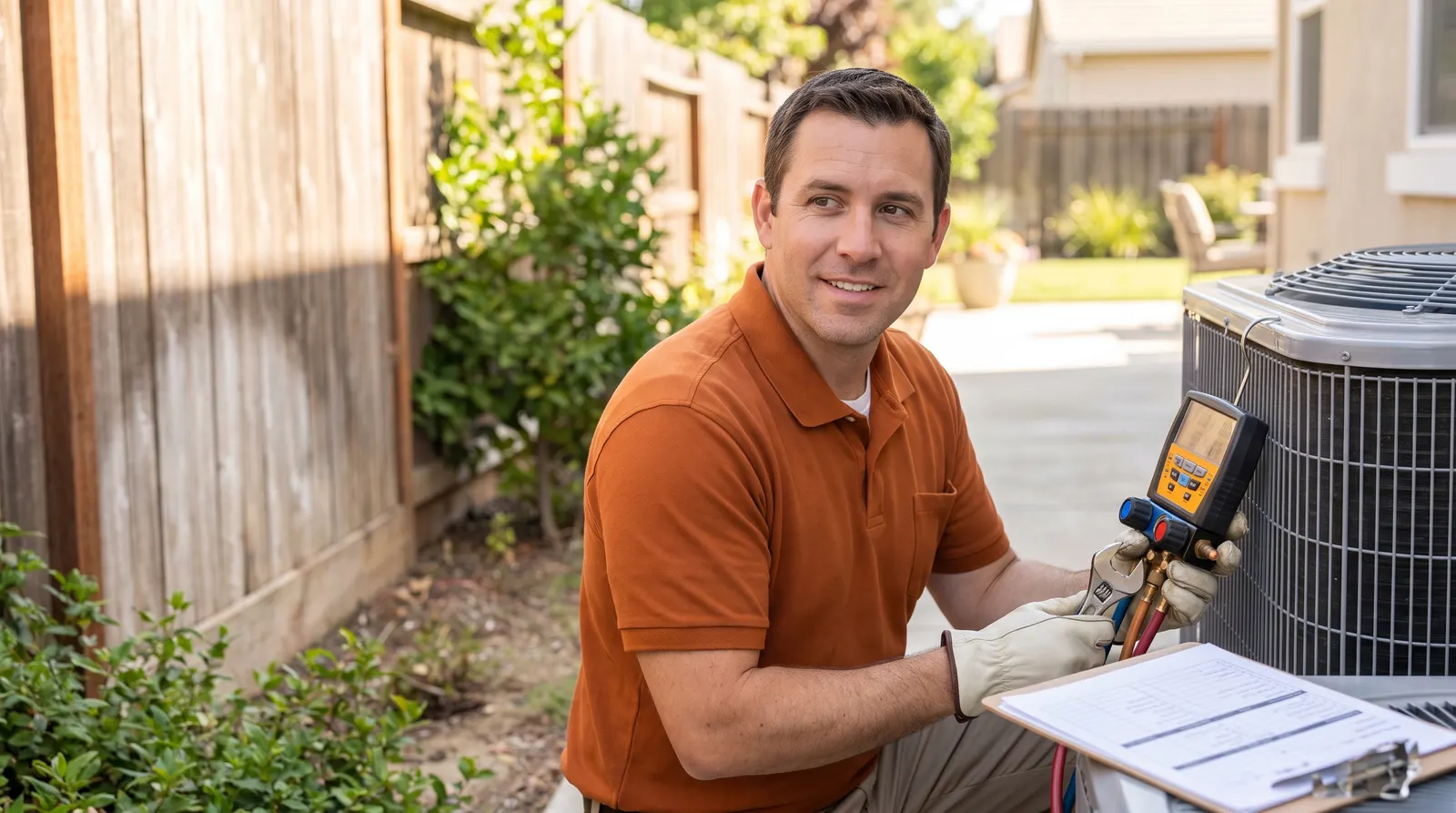
HVAC service in Roseville is the technical diagnostics, maintenance, repair, and installation of residential heating, ventilation, and air conditioning systems built to manage inland Placer County microclimates.
Every service reflects the same meticulous attention to detail — whether it's a single job or a larger hvac project across Roseville.
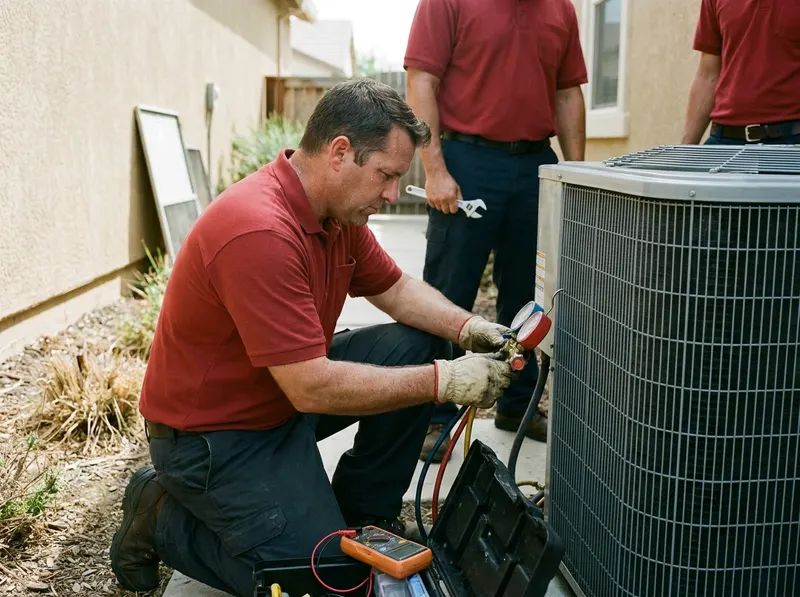
Emergency cooling triage focuses on rapid diagnostic isolation when high-pressure switches trip, outdoor fan motors seize, or compressor contactors pit under continuous Central Valley cooling loads. Technicians arrive equipped with calibrated digital manifold gauges, megohmmeters, and replacement dual-run capacitors ranging from 30 to 80 microfarads to resolve electrical start failures on the spot. Field checks include verifying line-voltage delivery from the outdoor disconnect box, measuring run-capacitor microfarad tolerance within factory ratings of plus or minus six percent, checking crankcase heater operation, and testing thermal expansion valve modulation. If the system suffers from an iced evaporator coil, technicians shut down mechanical cooling, initiate a forced blower thaw cycle, inspect the condensate drain pan for standing water backup tripping the secondary float switch, and evaluate subcooling and superheat metrics to isolate the exact mechanical or thermodynamic failure point.
View details →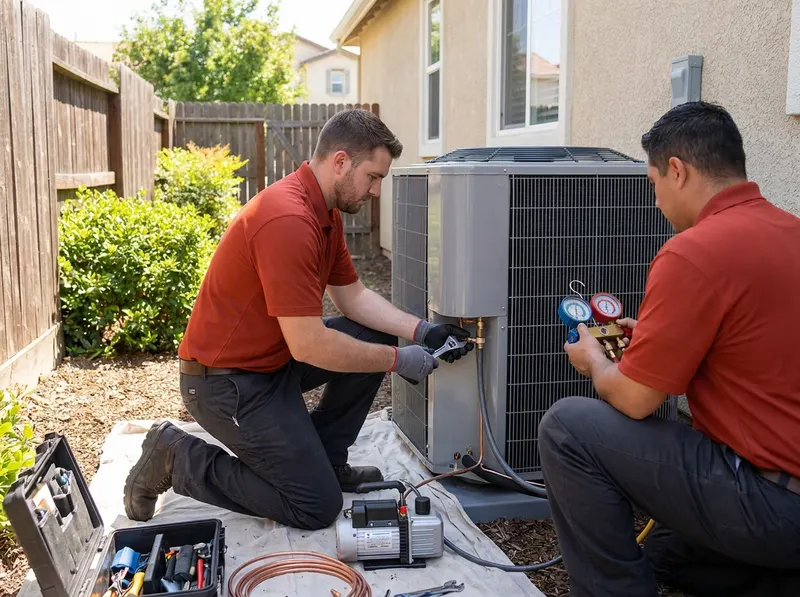
Central heat pump installations match modern variable-speed inverter technology with Placer County dual-fuel or all-electric home electrical profiles. Sizing follows strict Manual J heat load calculations that account for attic radiant barrier installations, west-facing window solar heat gain coefficients, and insulation depths common in newer developments along Pleasant Grove Boulevard and Baseline Road. Technicians position the outdoor condensing unit on a level composite equipment pad with anti-vibration isolation mounts, connect double-flared or brazed nitrogen-purged refrigerant lines, pull a deep vacuum below 500 microns to verify line-set integrity, and program variable-speed air handlers to match seasonal static pressure targets. High-SEER2 inverter systems modulate compressor speed in tiny increments down to twenty-five percent capacity, eliminating hard-start electrical spikes, maintaining indoor relative humidity below fifty percent, and significantly reducing summer electricity consumption on Roseville Electric or PG&E utility grids.
View details →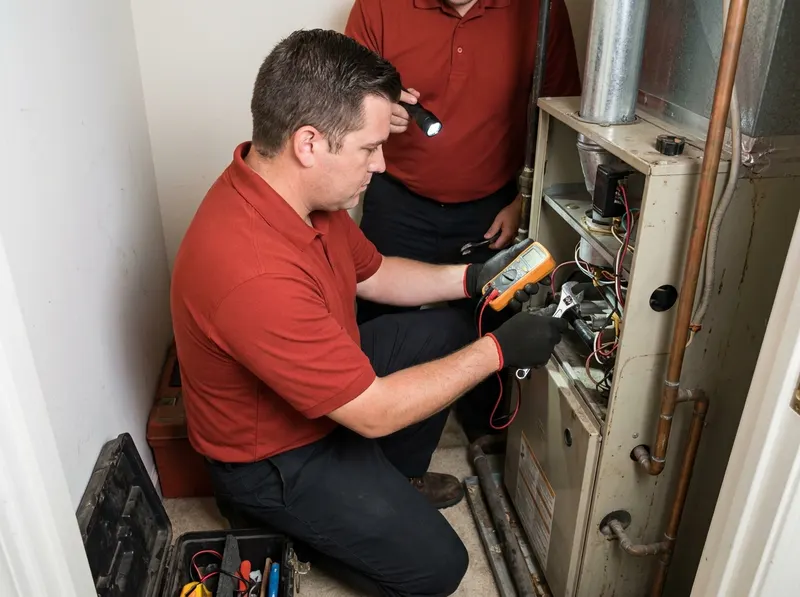
Furnace diagnostics focus on structural combustion integrity, electrical ignition sequences, and air distribution safety before cold northern California valley freezes arrive. Technicians inspect the primary and secondary heat exchangers using high-resolution articulating borescope cameras to identify hairline cracks, rust perforations, or thermal metal fatigue that could compromise indoor air safety. Repair work includes testing silicone nitride and silicon carbide hot surface ignitors for correct resistance between 40 and 90 ohms, cleaning oxidation off flame rectification rods with non-abrasive micro-mesh, testing draft inducer motor amp draw, and verifying that negative static pressure switches close reliably against flue-vent blockages. Technicians also calibrate gas manifold supply pressure to manufacturer specifications—typically 3.5 inches water column for natural gas—and verify temperature rise across the supply and return plenums to ensure safe, soot-free combustion throughout winter.
View details →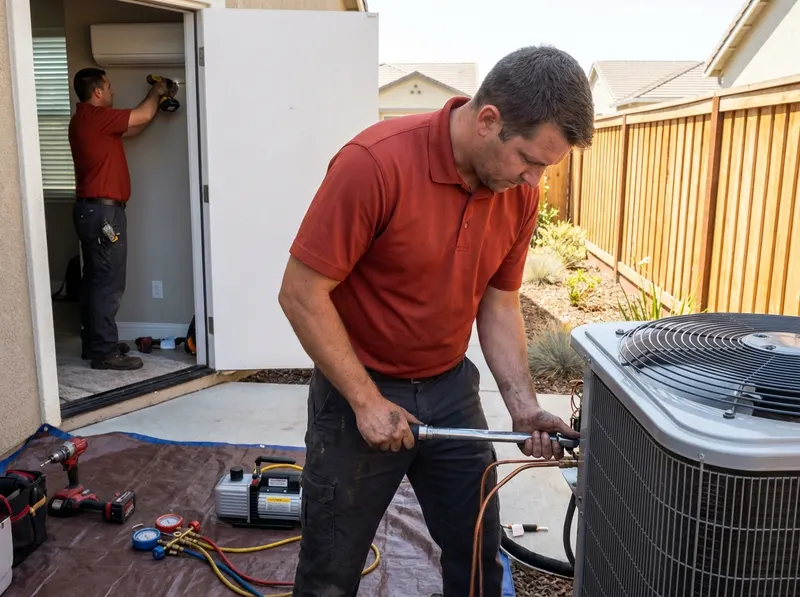
Ductless mini-split heat pump zoning delivers targeted thermal management for architectural problem zones such as bonus rooms above garages in Sun City Roseville, sunrooms along Roseville Parkway, home additions, and detached workshops. Single-zone and multi-zone systems utilize exterior inverter-driven condensers paired with low-profile wall-mounted, ceiling-cassette, or concealed-duct indoor air handlers. Technicians route insulated twin copper lines, communication cabling, and gravity condensate tubing through a neat three-inch exterior wall penetration, protected by color-matched architectural line-hide covers. Each indoor zone operates independently with dedicated wireless infrared controllers or integrated smart wall thermostats, allowing homeowners to eliminate hot-room complaints without forcing the primary central system to run continuously, cutting unneeded cooling in unoccupied rooms and eliminating the efficiency losses associated with long attic duct runs.
View details →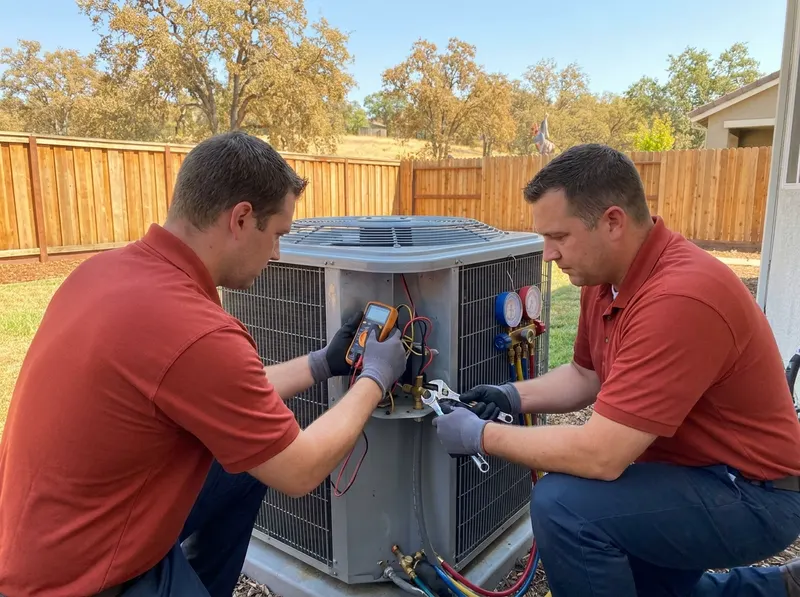
Comprehensive 24-point seasonal tune-ups restore factory-rated cooling and heating performance before peak weather demand stresses mechanical parts. For cooling tune-ups, technicians chemically foam and rinse outdoor aluminum condenser coils to clear embedded dust, cottonwood seeds, and ambient particulate, restoring critical heat dissipation capacity. Electrical testing measures compressor starting amperage, running load amps, capacitor degradation, and contractor contact resistance. For indoor components, technicians chemically clean condensate trap assemblies, flush drain lines with pressurized nitrogen to clear microbial algae buildup, verify emergency overflow float switch shutoff, sanitize evaporator drain pans, and measure wet-bulb and dry-bulb temperature splits across the coil. Heating tune-ups verify burner alignment, safety limit switch actuation, blower wheel balance, and thermostat cycling accuracy to ensure zero downtime during sudden seasonal temperature swings.
View details →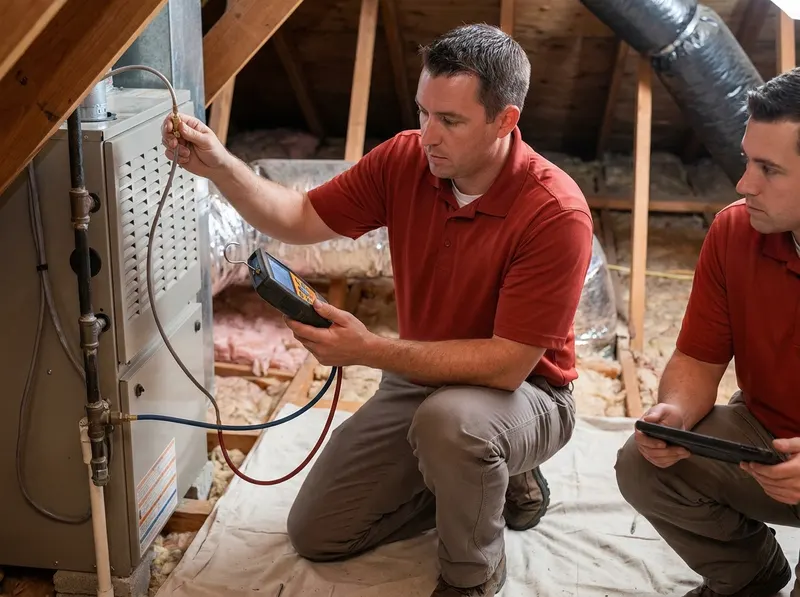
Static pressure diagnostics pinpoint duct restrictions, flex-duct kinks, crushed runs, and undersized returns that force blower motors to overheat and shorten compressor lifespan. Technicians insert static pressure probes into supply and return plenums using calibrated digital manometers to calculate Total External Static Pressure (TESP) against the equipment rating plate maximum—typically 0.50 to 0.80 inches water column. When elevated return static pressure is identified in large two-story floorplans across Blue Oaks or Stoneridge, technicians calculate necessary return grille surface area expansions, re-engineer restrictive supply drops, balance branch line airflow using manual balancing dampers, and seal high-loss supply takeoff connections using fibrous mastic paste and UL-181 foil tape. Proper duct balancing restores balanced room-by-room temperature distribution, stops whistling grilles, and protects ECM blower motors from premature electrical failure.
View details →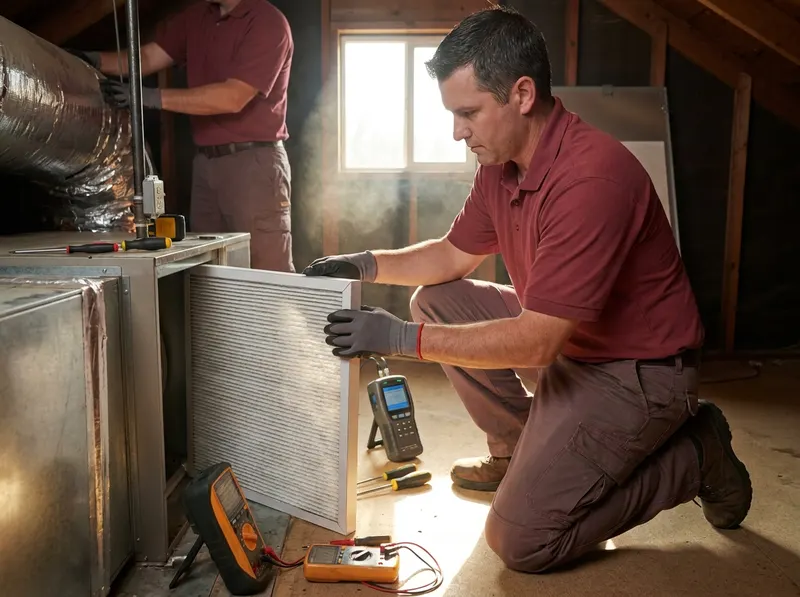
Placer County wildfire smoke introduces fine particulate matter (PM2.5), volatile organic compounds, and airborne ash into residential building envelopes during late summer and autumn. Standard one-inch fiberglass filter tracks cannot filter sub-micron smoke particles without creating extreme airflow resistance that freezes indoor coils. Technicians retrofit four-to-five-inch deep-pleated media filter cabinets directly adjacent to the indoor air handler, creating expanded filter surface area that accommodates MERV 13 and MERV 16 filtration media with low pressure drop. Additional air purification options include self-cleaning needlepoint bipolar ionization devices mounted inside the supply plenum to agglomerate airborne particles and whole-home sealed UV-C germicidal lamps that sterilize airborne mold spores and biological contaminants passing through the air distribution system.
View details →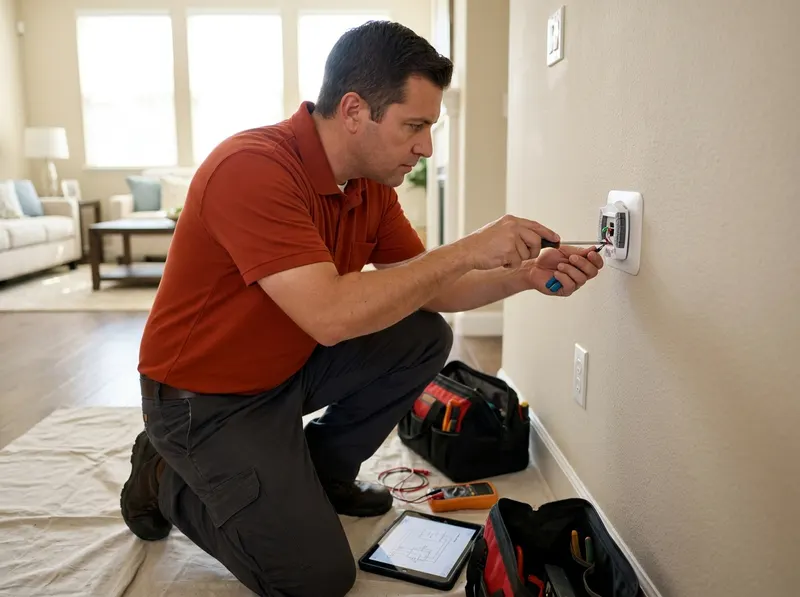
Smart thermostat conversions upgrade basic low-voltage controls to intelligent, multi-stage, and communicating automation platforms tailored to Roseville utility schedules. Technicians verify existing field wiring, pull new multi-conductor 18/8 thermostat wire or install dedicated common-wire (C-wire) power transformers to eliminate low-voltage phantom power drain that damages electronic control boards. System setup includes configuring multi-stage heating and cooling staging thresholds, setting auxiliary heat lockout temperatures for hybrid heat pump systems to prevent expensive heat strip engagement during mild weather, calibrating internal humidity sensors, and configuring geofencing and time-of-use scheduling. Proper control integration maximizes energy savings during peak afternoon electrical tariff periods without sacrificing household climate comfort.
View details →HVAC service in Roseville is the technical diagnostics, maintenance, repair, and installation of residential heating, ventilation, and air conditioning systems built to manage inland Placer County microclimates.
You get a firm, itemized quote for your hvac before any work begins — no surprises, no pressure.
Careful prep, tidy work, and a full cleanup when we are done. We treat your home and belongings like our own.
The same trusted, background-checked team from the first call to the final check.
If your cooling system blows warm air during a 105°F heatwave and the outdoor compressor hums without starting, choose dual-run capacitor or contactor replacement; if the compressor exhibits internal mechanical binding, grounded motor windings, or repeatedly trips your main Placer County electrical panel on a system over fifteen years old using phase-out R-410A or obsolete R-22 refrigerant, choose complete condensing unit replacement. If you need room-by-room temperature balancing in a two-story home in Westpark or Fiddyment Farm without tearing open finished drywall to replace undersized second-floor supply branches, choose a multi-zone ductless mini-split installation; if your existing sheet metal or flex ductwork tests airtight with total external static pressure below 0.5 inches of water column, choose a high-efficiency central inverter heat pump pairing. If your gas furnace in an older Cirby Ranch or Diamond Oaks home displays an intermittent flame rollout error, choose burner assembly cleaning and flame sensor resurfacing; if combustion analysis detects carbon monoxide levels exceeding 50 parts per million in the supply plenum or reveals a visible hairline fracture in the primary heat exchanger cell, choose immediate heating unit replacement. The trade-off is upfront equipment capital investment and line-hide exterior routing versus total whole-house air distribution balance, electrical service panel capacity, and long-term operating efficiency.
Every project gets a firm, written price after a free on-site visit. Ranges below for orientation.
Tell us about your hvac job and we'll send a clear, written quote — usually the same day. Or just call and talk to a real Roseville pro.

Roseville homes face extreme microclimatic stress driven by inland Sacramento Valley heat domes where sustained summer temperatures exceed 100°F to 108°F from late June through September. During these peak summer periods, unconditioned attic spaces beneath tile and composite roofs in neighborhoods along Blue Oaks Boulevard, Pleasant Grove Boulevard, and Baseline Road regularly reach temperatures exceeding 145°F. This extreme overhead heat load radiates directly into flex ductwork, placing severe thermal back-pressure on residential air conditioning and heat pump systems. In master-planned developments across Westpark and Fiddyment Farm, high-ceiling floorplans and extensive west-facing window orientations generate severe temperature splits between downstairs living areas and second-story bedrooms, requiring precise static pressure tuning, smart airflow dampening, or multi-zone inverter installations to equalize room temperatures. In older, established neighborhoods near Cirby Ranch, Diamond Oaks, and Maidu Regional Park, heating and cooling infrastructures often feature aging ductwork or older electrical breaker boxes that require careful mechanical and electrical assessment prior to transitioning to modern high-efficiency heat pumps. Furthermore, residential utility profiles differ between Roseville Electric municipal service and surrounding PG&E territories, requiring tailored equipment sizing to optimize time-of-use electrical rates and prevent excessive cooling utility bills. During late-summer wildfire events across Placer County and the Sierra foothills, smoke particulate entering residential ventilation systems necessitates deep-pleated media air filtration that captures airborne ash and soot without choking system airflow across sensitive evaporator coils.
 Precision HVAC Services